


Home

Download Mobile App: Android Download Mobile App: Android

  • Home
  • About
  • Map
  • Species
      • Back
      • Amphibians Amphibians
      • Birds Birds
      • Insects Insects
      • Mammals Mammals
      • Marine Marine
      • Plants Plants
      • Reptiles Reptiles
      • Spiders Spiders
  • Trails
      • Back
      • ACT
      • New South Wales
      • Northern Territory
      • Queensland
      • South Australia
      • Tasmania
      • Victoria
      • Western Australia
  • Get Involved
  • Blog
  1. You are here:  
  2. Home
  3. Species
  4. Marine

  • Marine

  • Native
  • Other

  • Common
  • Critically Endangered
  • Endangered
  • unknown

  • Australia
  • Vanuatu

Marine

As a result of climate change, warm tropical ocean currents are expected to strengthen and persist for longer periods in southern coastal area normally dominated by cooler waters. The consequent increases in water temperature are likely to result in unfavourable growing conditions for cool water algae species, causing a loss of seaweed in some areas.

All marine snails (molluscs) are under increasing stress due to ocean acidification which can weaken their calcium carbonate shells and reduce body condition. This makes them more prone to disease, predation and low reproduction. Increasing water temperature as a result of climate change will likely affect their abundance and cause a southward shift in their distribution.

Whales are particularly vulnerable to coastal pollution and human modifications of coastal environments due to their use of shallow waters during calving. They may alter their feeding behaviour, migration and breeding grounds in response to changes in ocean currents, temperatures and increasing human modification of shallow-water coastal areas.

Click on the images below to learn more about the species, their phenophase behaviours, and how to identify them, so you can contribute your ClimateWatch observations.

Black Nerite

A type of marine snail (mollusc) with a distinctive round or globe-shaped shell, black or dark grey in colour. The older snails will sometime have a white patch at the flattened tip (apex) of the spirals (whorls) due to weathering. Nerites have a white aperture (where the snail comes out) with a black rim and they usually have a black operculum (shell door or lid) which is sometimes spotted orange.

Read more: Black Nerite

Blue Bottle

Its pear-shaped float (bottle) is a translucent blue, with a wrinkled top which might be tinged with green or pink. It has a single main tentacle, and many shorter tentacles, all of which are blue and hang from its float.It is not a single animal but rather a colony of four kinds of individuals known as polyps. Each polyp has its own function: one is the float, another captures food, another digests the food, and another is responsible for reproduction.SizeFloat is 2 – 15 cm long, and

Read more: Blue Bottle

Blue Button

It has a blue float made of a flat, circular disc with many gas-filled tubes which keep it afloat. The disc is surrounded by tiny blue tentacles. The Blue Button is, in fact, a colony made up of different types of polyps, including some that are specialised for catching food, defense, or reproduction. Size Its disc is up to 2.5 cm across.

Read more: Blue Button

Blue Periwinkle

Small marine snails (molluscs), often called Australwinks. They are light blue to grey in colour and have a smooth shell that spirals up to a light brown to reddish-brown sharp tip (apex). Size 10 - 15 mm

Read more: Blue Periwinkle

Bull Kelp

A very large brown seaweed (algae). It has dark brown leathery, strap-like branches (thallus). It attaches to the substrate by a large disc or conical-shaped holdfast. Usually there is a single leathery frond (stalk) from the holdfast, which divides into long segments or fronds. Its strong holdfast often pulls off pieces of granite during storms which can remain attached to the kelp when washed up on shore.

Read more: Bull Kelp

Cunjevoi

A type of sea squirt, an animal that forms large colonies as a dense mat over rocks which are highly visible at low tide. Its shape is squat and globular. It has a thick leathery outer layer called a ‘tunic’ which is often covered with brown or green algae. Cylindrical in shape with 2 openings called siphons for inhaling and exhaling water and feeding.

Read more: Cunjevoi

Elephant Snail

Elephant snails are a type of semi-rare solitary marine snail (mollusc) and look like a black slug with a small white, shield-like shell on their backs. Size 70 - 150 mm

Read more: Elephant Snail

Giant Rock Barnacle

Barnacles are small invertebrates that live inside hard circular or pyramid-like structures made from calcium-carbonate. They are distinguished by their size: they are taller than they are round and have similar shape to a volcano. They can be found singularly or in a group.Giant rock barnacles are the largest type of barnacle and are comprised of six large plates that are white to light green in colour, and have top to bottom (transverse) grooves on them. They have a distinctive bright

Read more: Giant Rock Barnacle

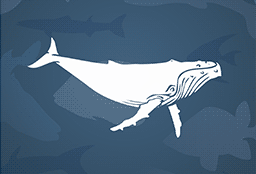
Humpback Whale

Dark grey to black on top and usually white on the belly. Humpbacks have very large, elongate pectoral fins, a small but prominent dorsal fin and a large, bushy blow (up to 5 m tall). The large fins, dark tail with white underneath, active breaching and tendency to “hump” their backs and raise their tail out of the water before diving, distinguish humpbacks from other whales. Size Adult humpbacks can reach a length of up to 15 m.

Read more: Humpback Whale

Military Turban

Large solid marine snail (mollusc) with noticeable rounded spirals (whorls). Generally smooth but some individuals show 2 strongly developed rows of spines on the body; rown or dark green striped patterns on a lighter green/fawn background. They are fished commercially for human consumption. They are also prized bait for fisherman and can be locally fished out in some areas.

Read more: Military Turban

Moon Jelly

They have a transparent mushroom-shaped bell. Its reproductive organs form a conspicuous clover-like shape when viewed from above. Numerous fine thread-like tentacles hang from beneath the edge of the bell. The moon jelly is a favourite food of marine turtles.

Read more: Moon Jelly

Neptune’s Necklace

Its species name banksii is after the English naturalist and botanist Sir Joseph Banks.A small, brown seaweed (algae) which resembles a beaded necklace. It has branches (thalli) which are made up of strings of hollow, water-filled, round or oval-shaped beads joined together by a short stalk. Each bead is covered in many pores, giving it a rough surface. It is attached to the substrate by a thin disc (holdfast).SizeFronds 10 – 30 cm long, beads 5 – 15 mm in diameter, and holdfast 3 – 10 mm

Read more: Neptune’s Necklace

Orca

Mostly black in colour with a light grey saddle behind the dorsal fin and a distinct white oval shaped horizontal patch behind the eye. The belly, underside of the jaw, and underside of the tail are also white. Mature males have a tall triangular-shaped dorsal fin while females and juveniles have a smaller, more curved dorsal fin. Size Adults reach a length of 10 m, dorsal fin up to 1.8 m in height.

Read more: Orca

Ribbed Top Shell

A medium-sized marine snail (mollusc). They are grey or off-white in colour, with 5 - 6 distinctive ridges spiralling up towards a sharp tip (apex). Size 25 - 50 mm Field Guide Improve your identification skills. Download your Ribbed Top Shell guide here!

Southern Right Whale

The name ‘right whale’ was given to them by early European whalers who thought they were the ‘right’ type of whale to hunt. Their slow moving nature made them easy targets and their blubber was of high quality. They also floated when dead, making them much easier to move to shore.Generally black with small patches of white on the belly and lacking a dorsal fin. They have a rounded head and short, spatula shaped flippers with a distinctive V shaped blow.Distinctive featureThey have

Read more: Southern Right Whale

Spotted Jelly

A large jellyfish with a rounded bell shape that is clear or tinted brown or yellow. The bell has many obvious small white crystalline spots close to the surface that are evenly distributed.The tentacles are located in the centre of the bell, with 8 individual arms visible. Two sets of tentacles are visible: one is short, fleshy (cauliflower-like) and the other is longer, clear to white (rope-like) and extend beyond the shorter fleshy tentacles. The longer tentacles also have white spots on

Read more: Spotted Jelly

Surf Barnacle

They are called Surf Barnacles because they prefer to live in areas of medium to high energy wave action. Small invertebrates that live inside hard circular or pyramid-like structures made from calcium-carbonate. They have eight main side plates, surrounded by many smaller ones, giving them a scaly appearance and are usually grey with a greenish tinge. Size 20 mm high, 25-30 mm diameter. Field Guide Improve your identification skills. Download your Surf Barnacle guide here!

Velvet Weed

A small green seaweed. It has dark round, forked fronds (branches) with a fuzzy appearance and a velvety or sponged texture. Size Up to 30 cm long. Field Guide Improve your identification skills. Download your Velvet Weed guide here!

Violet Snail

Medium marine snails (molluscs) that float around in the open ocean. They have a purple shell that lightens in colour as you move towards the flattened top of the shell. The shell itself is very light weight and they have no operculum (lid). Their flesh is a dark purple or sometime black. They float around the open oceans upside down, attached to a raft of mucus bubbles that they make. Size Up to 30 mm

Read more: Violet Snail

Waratah Anemone

Flower-like invertebrate that has many long tentacles surrounding a central mouthpart which is attached to a hard surface. These specialised fighting tentacles come from the acontia, which appear as white spots on the top of the column. At low tide or when disturbed, the tentacles retract and the anemone looks like a round blob of jelly. They range in colour from bright red, reddish-brown to dark purple.Their tentacles contain hundreds of stinging cells called ‘nematocysts’ which the

Read more: Waratah Anemone

Gren Totel (Green Sea Turtle)

Chelonia mydasOther names: Green Sea Turtle, Green Turtle, Tortue verte, Grinfala totel, Uga VanuaGren Totel are found in tropical, subtropical and temperate regions of the world, including in Vanuatu. Their smooth shells are dark brown, grey or olive with lighter yellow to white undersides. Hatchlings are very dark in colour with white edges on their bodies and flippers. Once mature, they forage in shallow coastal waters, mainly eating seagrass and algae. Every 2-5 years they return to the

Read more: Gren Totel (Green Sea Turtle)

Palolo Worm

Palola viridis Palolo are found in tropical regions of Asia and the Pacific, including Vanuatu. Palolo are a type of segmented marine worm that grow up to 40 cm in length. Each segment of their bodies has paddlelike appendages with gills. The head of the worm has many sensory tentacles. Males are reddish-brown and females are bluish-green. They live in crevices and coral rubble.SizeUp to 40 cm in length.BreedingDuring the breeding season, the worm breaks in half with the tail section

Read more: Palolo Worm

Leta Bak Totel (Leatherback Turtle)

Dermochelys coriaceaLeta Bak Totel are found in tropical and temperate regions of the world, with small numbers nesting in Vanuatu. The shell is made of soft leathery skin with seven ridges or keels. The colour is mostly black with differing amounts of pale spotting, including a pink spot on the heads of adults. It has paddle-like limbs that are clawless and black with white margins and pale spots. Hatchlings are predominantly black with white margins on their flippers and keels on the

Read more: Leta Bak Totel (Leatherback Turtle)

Hoksbil Totel (Hawksbill Turtle)

Eretmochelys imbricata Hoksbil Totel are found in tropical, subtropical and temperate regions of the world, including several nesting areas in Vanuatu. The shell is olive-green or brown with reddish-brown, brown or black markings in a tortoiseshell pattern. The shell is domed and heart-shaped with overlapping scales. The hatchlings are brown to black above and lighter underneath.Distinctive featuresThe Hoksbil Totel has a parrot-like beak and narrow head.SizeAdult females weigh between

Read more: Hoksbil Totel (Hawksbill Turtle)

partner

  • Imprint
  • Privacy Policy
  • FAQ
  • Contact us
Home
SPOTTERON Citizen Science Platform Logo This project website is powered by SPOTTERON Citizen Science