




CWA_Sunset_4k.jpeg
ClimateWatch App
Download the
CWA_Sunset_4k.jpeg
Slide Two
Slide Two
previous arrow
next arrow
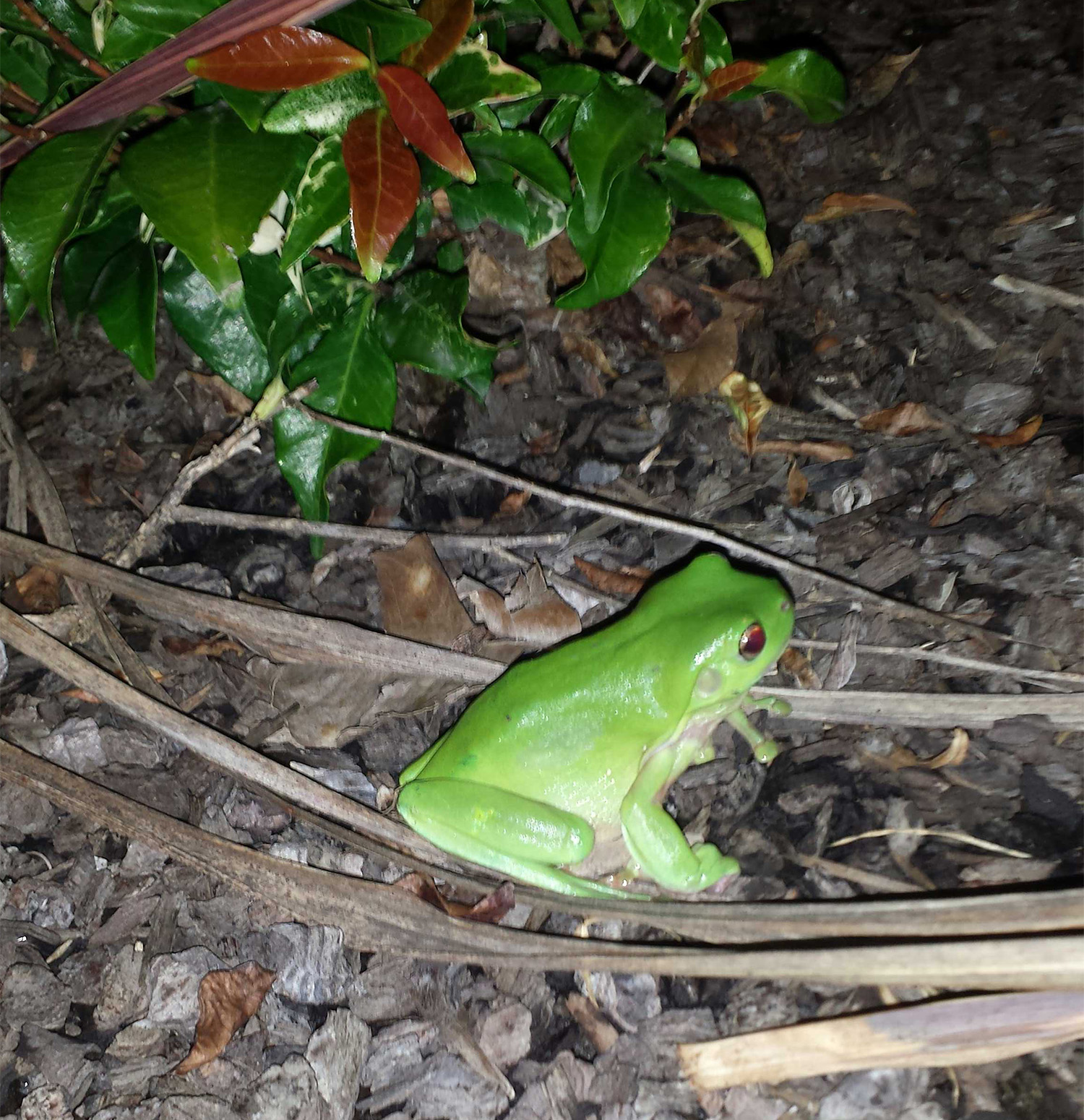
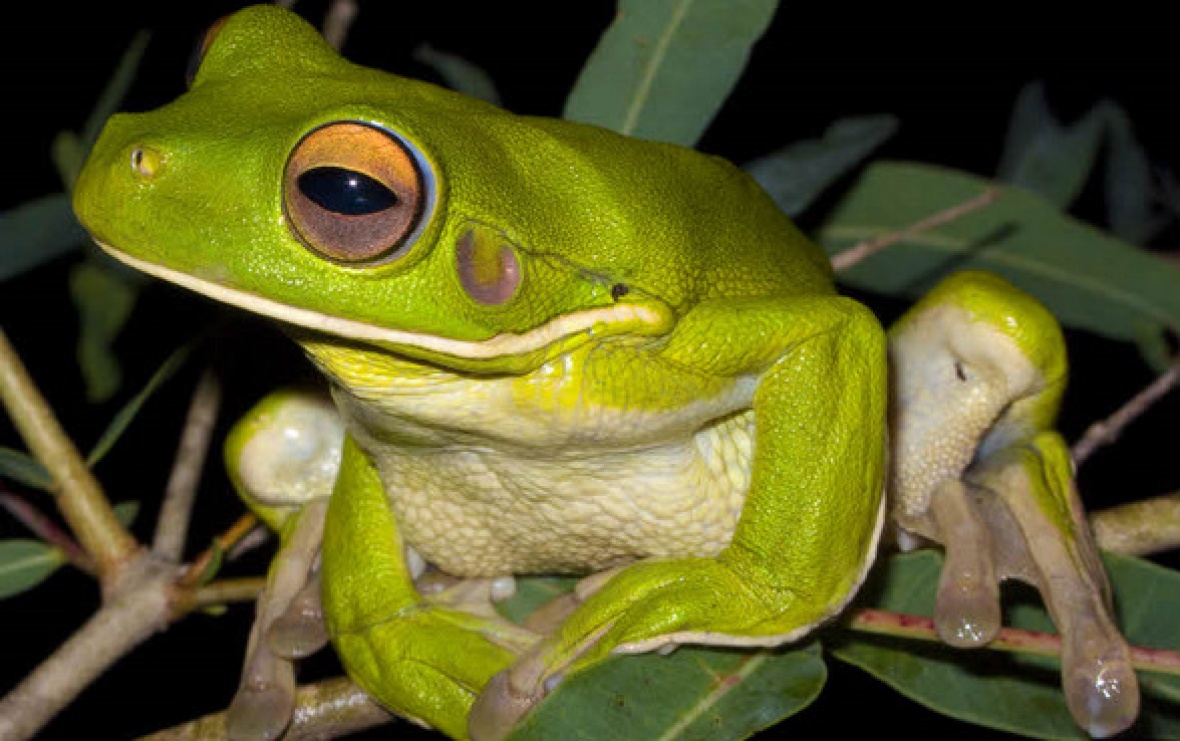
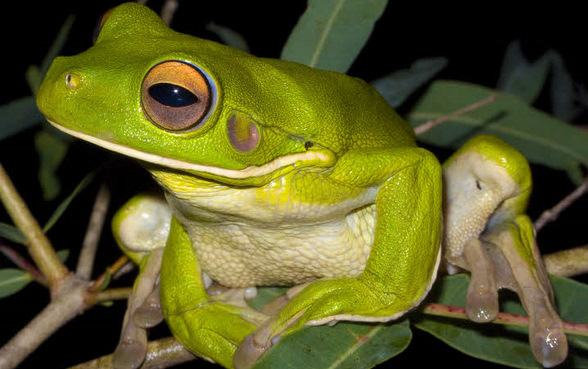
White-lipped Tree Frog B G Thomson/www.auswildlife.com

White-lipped Tree Frog

Did You Know?

  • Its second finger is longer than its first
  • Often accidentally found in shipments of bananas and other produce to southern Australia, but it cannot survive the colder weather there
FactBox Image

A ground-dwelling tree frog found in Southwest Australia. It gets its name from the male frog's mating call, which sounds like a motorbike riding past and changing gears. Other common names are Moore's frog, the western bell frog, western green and golden bell frog, and western green tree frog.

Ranges from bright green to olive to pale brown, and it can change colour depending on the local temperature and environment. It has a white (occasionally pinkish) stripe on the back of each leg that runs down to its toes, and its belly is white.

Size

11 – 14 cm

Distinctive features

  • A white stripe that runs along its lower lip and extends below its ear patch to above the base of its arm
  • Its fingers are half webbed and its toes are fully webbed
  • It is the largest tree frog in the world and the only one with a white stripe on its lower lip

Behaviour

Call

A loud, harsh barking sound that resembles a strong repeated tapping or “tonk…tonk…tonk” sound.

Listen to the White-lipped Tree Frog call © Nature Sounds/David Stewart

Diet

Small insects and vertebrates.

Movement

Agile climbing.

Breeding

After rain, males perch high up in the trees surrounding swamps and ponds, and call to attract females. Females lay dumbbell-shaped clumps of about 4,000 eggs!

Field Guide

Improve your identification skills. Download your White Lipped Tree Frog field guide here!
Species: WhatToObserve Image

What to Observe

  • Calling

  • Courting/Mating

  • The appearance of eggs

Species: WhenAndWhere Image

When and Where

When To Look

  • September to April
  • Listen for males calling, particularly after heavy rain

Where To Look

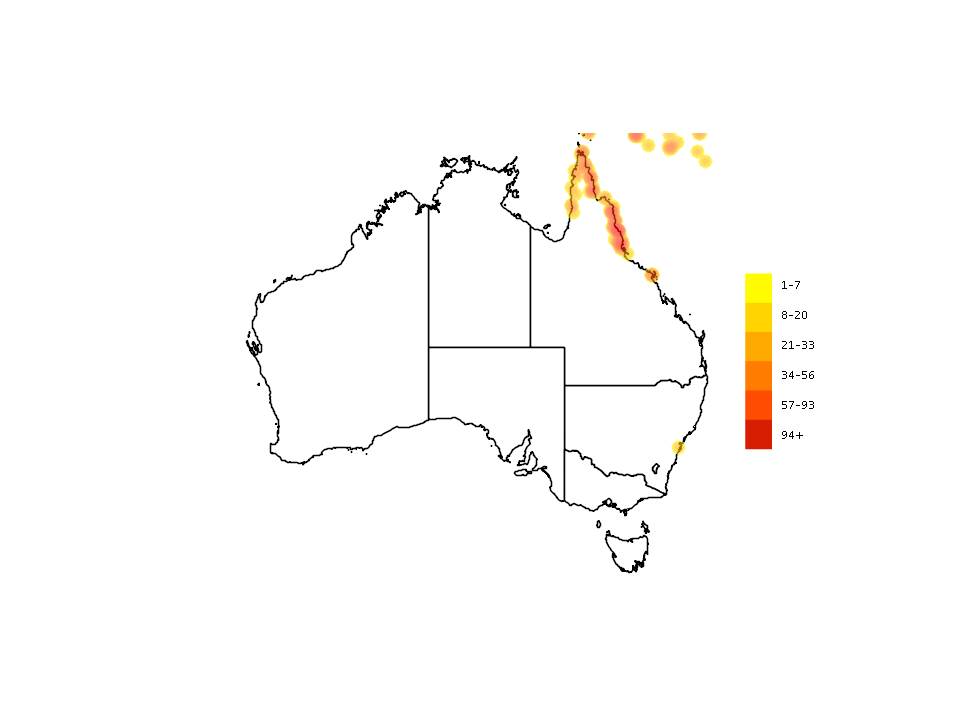
  • In moist, humid coastal areas from north of Townsville to the Cape York Peninsula in north Queensland and into the Gulf of Carpentaria
  • In and around rainforests, swamps, mangroves, seasonal wetlands, forests and heathlands, and also in urban areas
  • Around paperbark swamps and in leafy suburbs
  • Frequently found in houses, especially in drainpipes, toilet cisterns and shower blocks
Species: WhatElse Image

What Else?

Similar Species

The Green Tree Frog (Litoria caerulea) is smaller (10 cm long) and lacks the white stripe running along its lower lip.

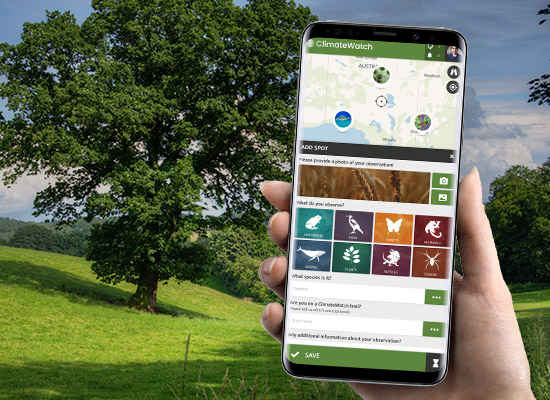
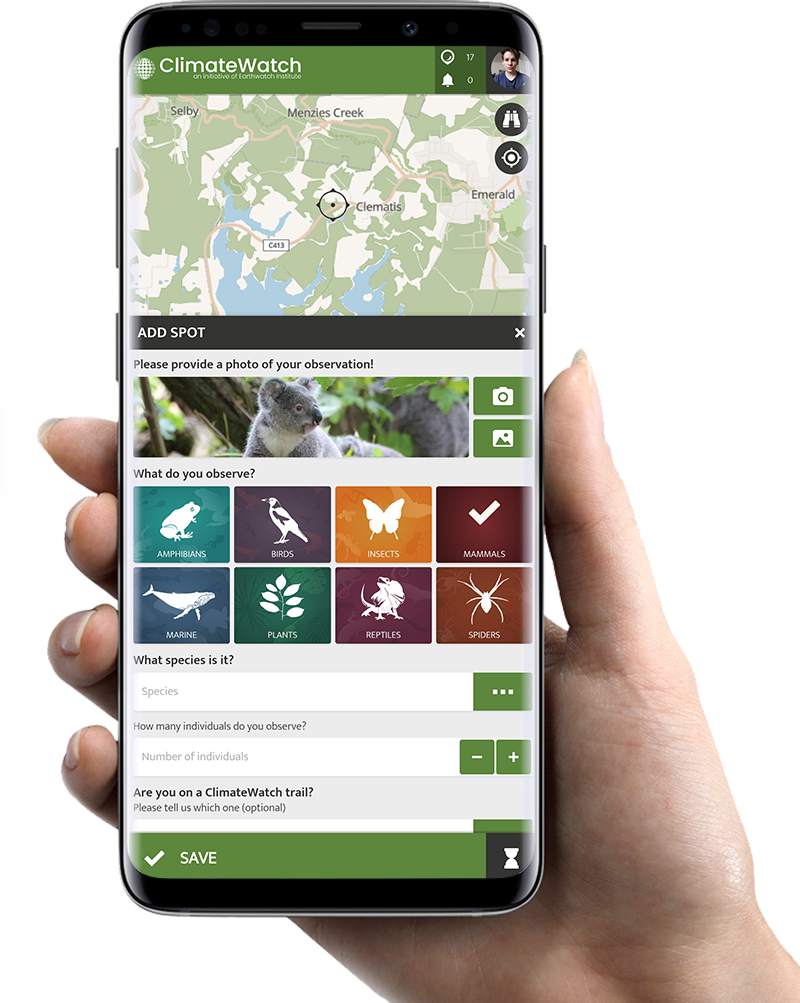
ClimateWatch smartphone app

Step 1: Citizen Science App Download

App Download

Download and install the free App on your Android device or on your iPhone via the App Stores linked below
Step 2: Register your SPOTTERON Citizen Science user account

Register

After starting the App, you can register your own user account on the platform with just your email address.
Step 3: Login and contribute in the Citizen Science App

Start!

Start observing! You are automatically logged-in after registering and you can add your first spot right away.


Download the App on your smartphone now or open the map in your browser:

 Badge App Download Android Badge App Download iPhone Open map

Latest Contributions

Fetukai, Year 9
Date: 10.06.2026

Dhruvi
Date: 10.06.2026

Dhruvi
Date: 09.06.2026

Dhruvi
Date: 09.06.2026

Dhruvi
Date: 09.06.2026

Dhruvi
Date: 09.06.2026

Dhruvi
Date: 09.06.2026

Dhruvi
Date: 09.06.2026

Dhruvi
Date: 09.06.2026

Dhruvi
Date: 09.06.2026


See more Spots on the map