




CWA_Sunset_4k.jpeg
ClimateWatch App
Download the
CWA_Sunset_4k.jpeg
Slide Two
Slide Two
previous arrow
next arrow
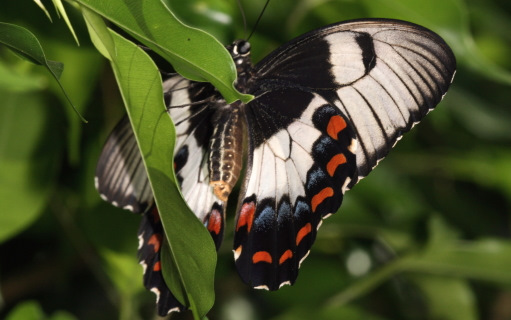
Orchard Swallowtail Paul Balfe/Flickr

Orchard Swallowtail

Did You Know?

  • Males can be territorial and will chase anything black and white that enters their territory, including Magpies
  • Considered a minor pest in citrus orchards, although unlikely to survive long in commercial orchards due to persistent spraying
FactBox Image

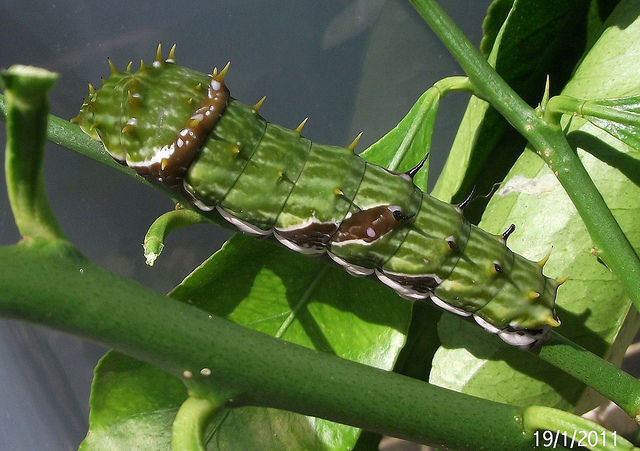
The caterpillar (larva) is initially green, white and brown and resembles bird droppings. A mature caterpillar has a dark brown head, a green body with some pale yellow and brown markings, and spines along its back.

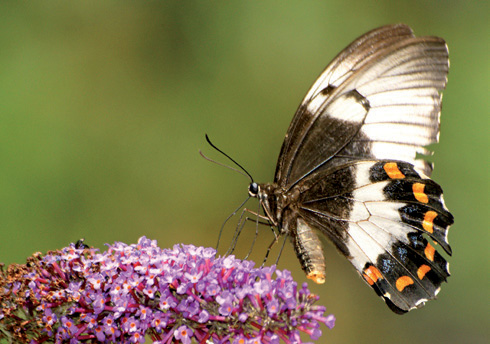
The male butterfly (adult) is black with an arc of creamy-white spots near the tip of each forewing. Each hindwing has a creamy-white patch and a single red spot, and there are many red crescents on its underside.

The female butterfly is brown to black, and the outer half of its forewing is whitish-grey. Its hindwing has a creamy-white patch, as well as a series of blue and red crescent-shaped markings.

Size

Caterpillar up to 6 cm long; Butterflies 10 – 12 cm wingspan.

Behaviour

Diet

The caterpillar eats the leaves of many plants, particularly citrus and native species from the Family Rutaceae; it prefers to eat young leaves but large caterpillars will eat older leaves. The butterfly feeds on nectar from a variety of plants, particularly lantana.

Movement

If disturbed, a caterpillar will reveal a red-orange “tentacle” (known as the osmeterium) from behind its head which emits a foul smell to deter predators.

Flight

Generally slow and erratic unless disturbed, and females fly more slowly during the egg-laying period. The males tend to “patrol” flight paths.

Breeding

Females lay eggs on the underside of host leaves, and the eggs hatch one week later.

Field Guide

Improve your identification skills. Download your Orchard Swallowtail field guide here!
Species: WhatToObserve Image

What to Observe

  • Presence (to establish the first and last sighting for the season)

  • Courting/Mating

  • Egg laying

  • Chrysalis (butterfly emerging from its shell)

Species: WhenAndWhere Image

When and Where

When To Look

From October through to May. The caterpillar eats for four weeks, then becomes a pupa for two weeks before emerging as a butterfly.

Where To Look

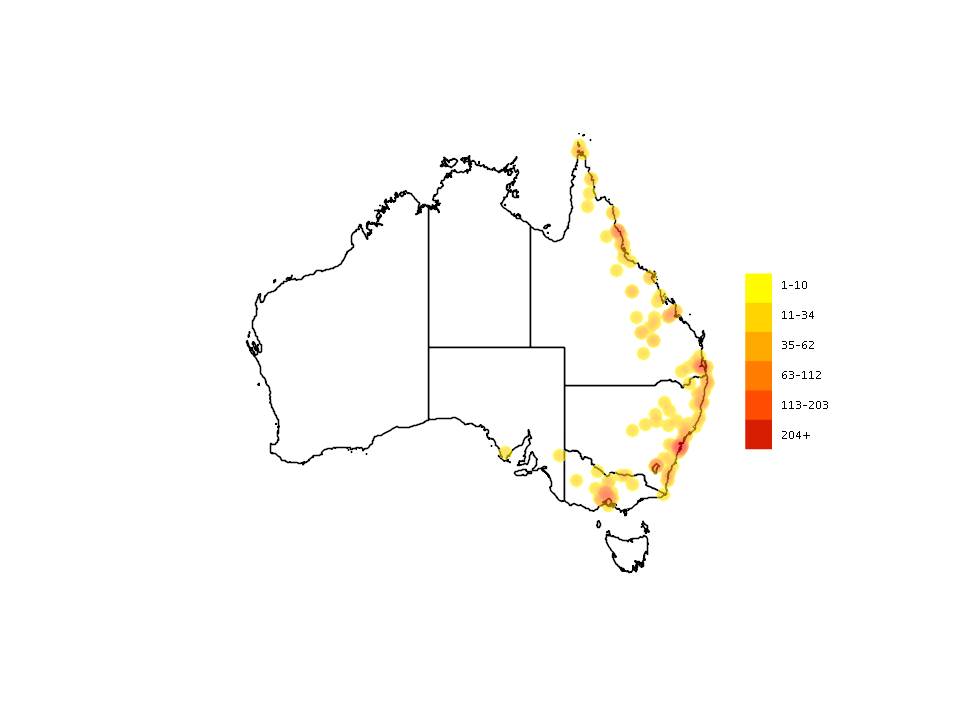
  • Along eastern Australia, from Cape York in northern Queensland to South Australia, but is rare in southern Victoria and South Australia as it prefers more humid tropical and subtropical conditions
  • In forests, woodlands and urban areas, including backyard gardens and orchards, particularly where citrus plants are grown
  • During periods of unusually high humidity it moves south during summer and autumn
  • Look on the leaves of citrus plants for caterpillars, and around flowers, particularly lantana, for butterflies
Species: WhatElse Image

What Else?

Similar Species

Dingy or Dainty Swallowtail Butterfly caterpillar is smaller (about 3.5 cm long) and dark green to black with yellow and white spots. The butterfly is also smaller (6 cm wingspan) with creamy-grey patches over its entire black forewing, and creamy-white, red and blue patches on its hindwing.

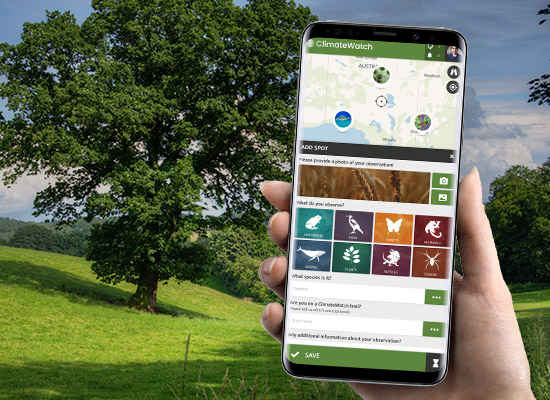
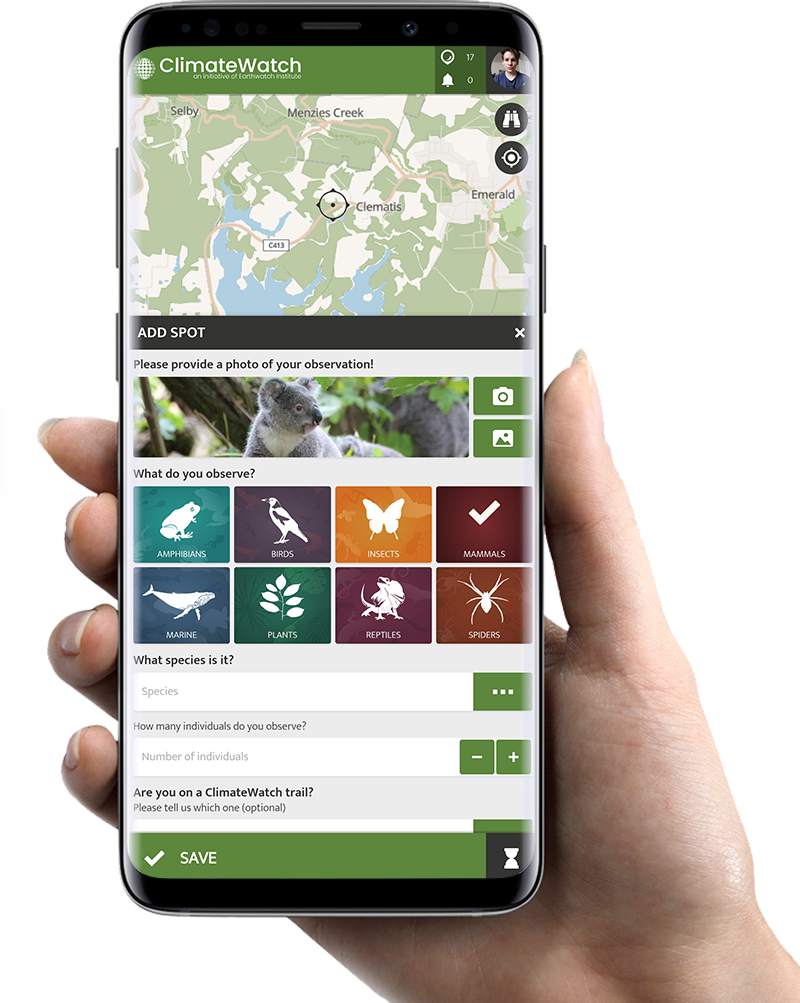
ClimateWatch smartphone app

Step 1: Citizen Science App Download

App Download

Download and install the free App on your Android device or on your iPhone via the App Stores linked below
Step 2: Register your SPOTTERON Citizen Science user account

Register

After starting the App, you can register your own user account on the platform with just your email address.
Step 3: Login and contribute in the Citizen Science App

Start!

Start observing! You are automatically logged-in after registering and you can add your first spot right away.


Download the App on your smartphone now or open the map in your browser:

 Badge App Download Android Badge App Download iPhone Open map

Latest Contributions

Fetukai, Year 9
Date: 10.06.2026

Dhruvi
Date: 10.06.2026

Dhruvi
Date: 09.06.2026

Dhruvi
Date: 09.06.2026

Dhruvi
Date: 09.06.2026

Dhruvi
Date: 09.06.2026

Dhruvi
Date: 09.06.2026

Dhruvi
Date: 09.06.2026

Dhruvi
Date: 09.06.2026

Dhruvi
Date: 09.06.2026


See more Spots on the map