


CWA_Sunset_4k.jpeg
ClimateWatch App
Download the
CWA_Sunset_4k.jpeg
Slide Two
Slide Two
previous arrow
next arrow
Blue Button Yue Chin Chew

Blue Button

Did You Know?

  • The sting from its tentacles is not known to be dangerous to humans
  • It is often found floating with the Blue Sea Slug which floats upside down
FactBox Image

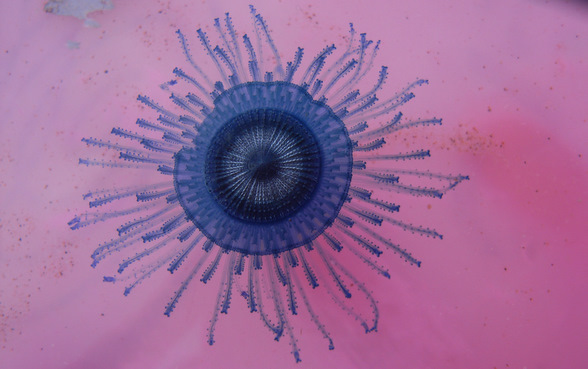
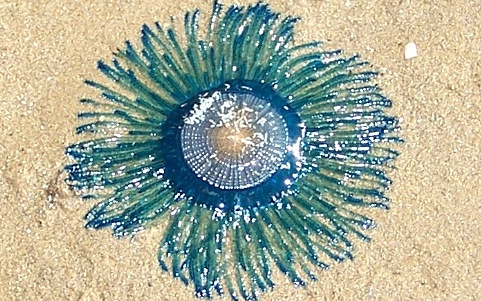
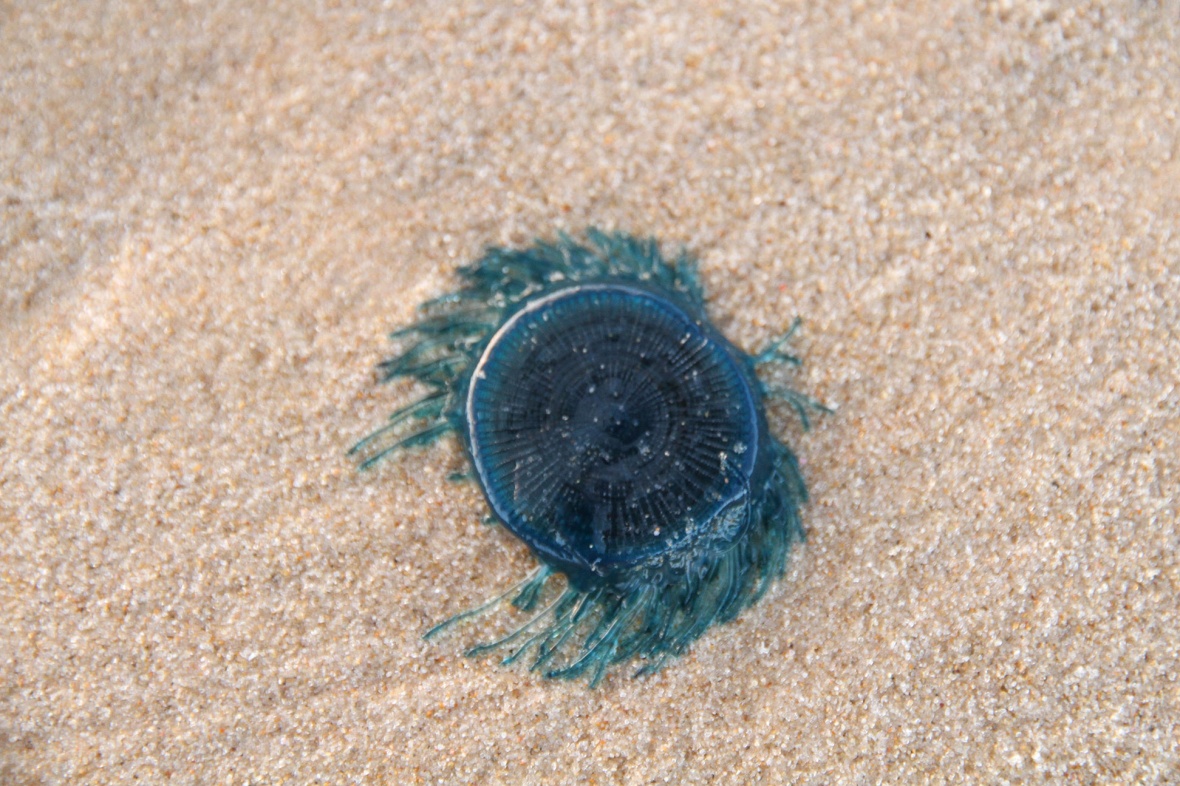
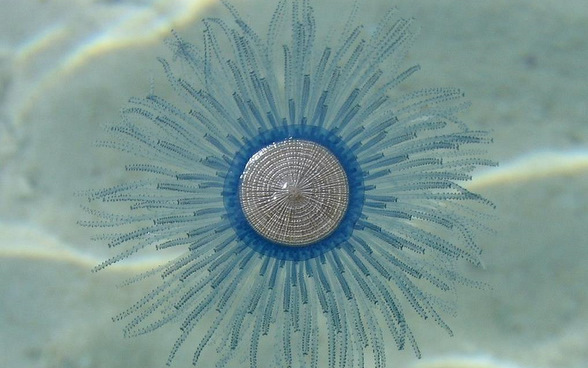
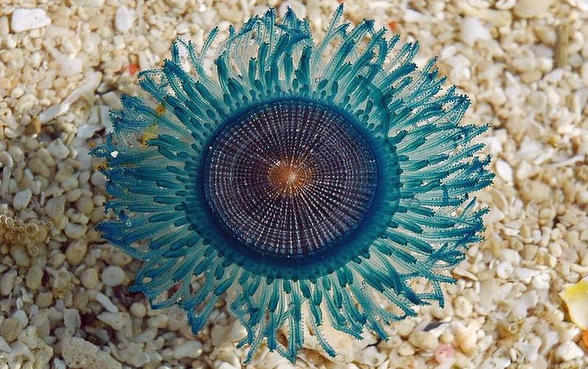
It has a blue float made of a flat, circular disc with many gas-filled tubes which keep it afloat. The disc is surrounded by tiny blue tentacles.

The Blue Button is, in fact, a colony made up of different types of polyps, including some that are specialised for catching food, defense, or reproduction.

Size

Its disc is up to 2.5 cm across.

Behaviour

Diet

Small marine animals such as copepods, crab larvae and tiny fish fry. Its tentacles kill prey with their sting and then move the food to its mouth, which is on the underside of its disc.

Movement

It floats freely in the water, and is moved along by ocean currents and wind.

Breeding

They are hermaphrodites (i.e. both male and female). The specialised reproductive polyps release both eggs and sperm into the water. When the eggs have been fertilised by the sperm, they develop into larvae that subsequently metamorphose into individual polyps. A Blue Button colony forms when one polyp divides to form new types of polyps which become specialised for different functions.

Field Guide

Improve your identification skills. Download your Blue Button guide here!
Species: WhatToObserve Image

What to Observe

  • Presence (to establish the first and last sighting of the season)

Climate Adaptations

We don't yet know whether water temperature affects where jellyfish are found. Data on their distribution will help determine whether their range is changing and how climate change may impact their distribution.

Species: WhenAndWhere Image

When and Where

When To Look

  • All year round
  • Particularly in warmer months, around summer time

Where To Look

  • On the surface of coastal waters around Australia
  • Often washed up in large numbers
  • Common on exposed ocean beaches after strong onshore winds have blown it in from the tropical north
Species: WhatElse Image

What Else?

Similar Species

Blue Bottle Jellyfish (Physalia utriculus) has an air sac for a float and long blue tentacles which can be up to 10 m long whereas the Blue Button's tentacles are short.

By-the-Wind Sailor (Velella velella) doesn't have any tentacles fringing its disc and does have a sail sitting upright on its disc.

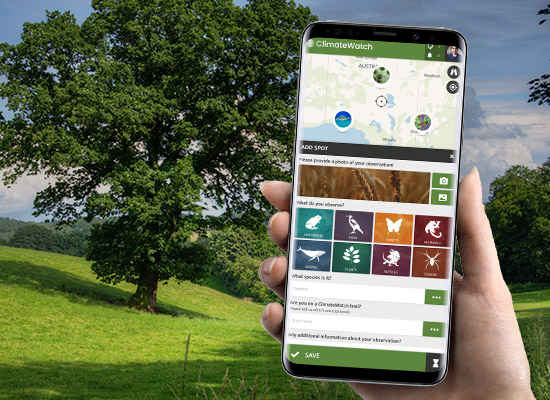
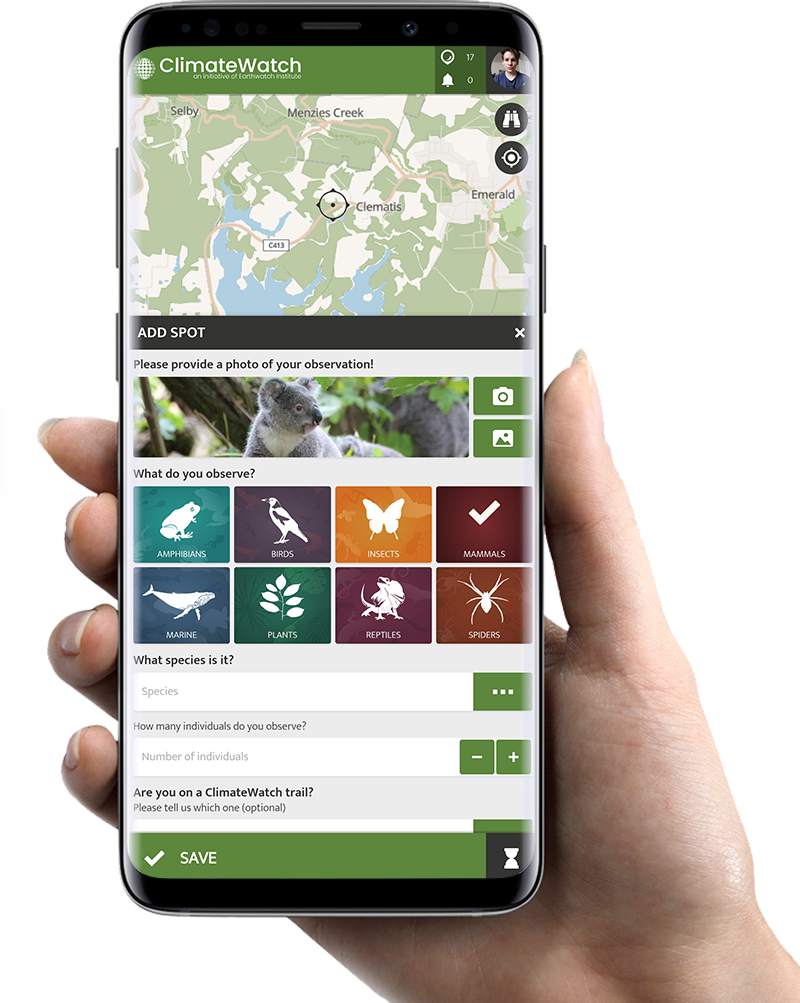
ClimateWatch smartphone app

Step 1: Citizen Science App Download

App Download

Download and install the free App on your Android device or on your iPhone via the App Stores linked below
Step 2: Register your SPOTTERON Citizen Science user account

Register

After starting the App, you can register your own user account on the platform with just your email address.
Step 3: Login and contribute in the Citizen Science App

Start!

Start observing! You are automatically logged-in after registering and you can add your first spot right away.


Download the App on your smartphone now or open the map in your browser:

 Badge App Download Android Badge App Download iPhone Open map

Latest Contributions

Fetukai, Year 9
Date: 10.06.2026

Dhruvi
Date: 10.06.2026

Dhruvi
Date: 09.06.2026

Dhruvi
Date: 09.06.2026

Dhruvi
Date: 09.06.2026

Dhruvi
Date: 09.06.2026

Dhruvi
Date: 09.06.2026

Dhruvi
Date: 09.06.2026

Dhruvi
Date: 09.06.2026

Dhruvi
Date: 09.06.2026


See more Spots on the map