



CWA_Sunset_4k.jpeg
ClimateWatch App
Download the
CWA_Sunset_4k.jpeg
Slide Two
Slide Two
previous arrow
next arrow
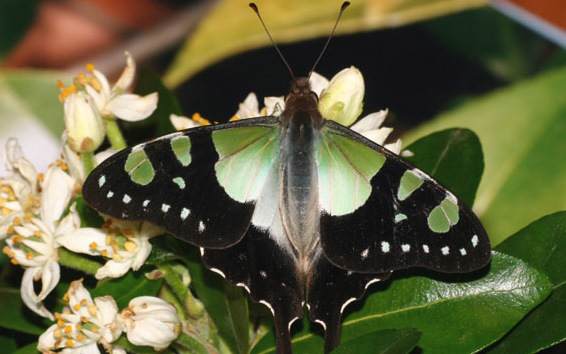
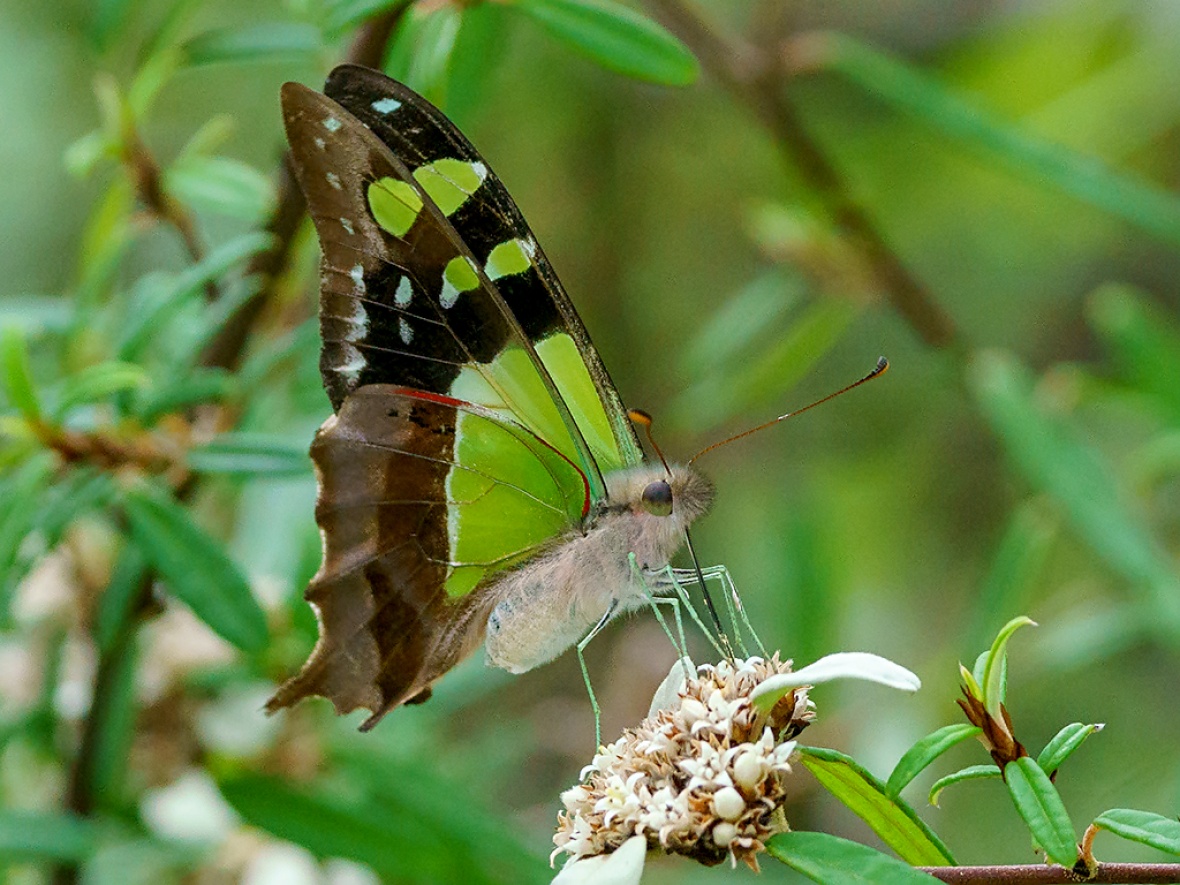
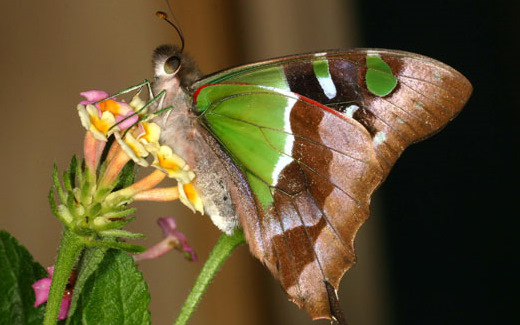
Macleay's Swallowtail David Cook/Flickr

Macleay's Swallowtail

Did You Know?

  • It is the only swallowtail found in Tasmania
  • Named after entomologist Alexander Macleay, chairman of the Linnean Society of London in 1814 and later founded the Macleay Museum at the University of Sydney
FactBox Image

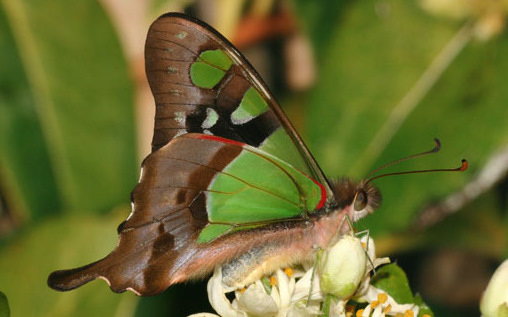
The caterpillar (larva) is green with a hump on its upper back and small white dots over its body. The butterfly (adult) has brown or black outer wings with some white markings plus two green blotches, and green inner wings (closest to its body). The underside of each wing has the same patterning but the green parts tend to be darker. It has “tails” at the tip of each hindwing.

There are two recognised subspecies Graphium macleayanus macleayanus from Queensland and NSW, and Graphium macleayanus moggana from Tasmania, Victoria and parts of subalpine NSW.

Size

Caterpillar 4 cm long; Butterfly wingspan 5 – 6 cm (can reach up to 8 cm).

Behaviour

Diet

The caterpillar eats leaves from a range of plants including various species of Sassafras, Native Pepper trees, Camphor Laurel, and other plants in the Lauraceae and Rutaceae families. The butterfly feeds on nectar from Lantana plants and various species in the Asteraceae family, which are the daisies.

Movement

The male butterfly defends its territory from rival males and can be seen circling treetops, descending to restlessly sip nectar from flowers.

Flight

It flies during the warmer months and never stops for long. Its wings are always vibrating.

Breeding

Females lay pale green eggs on the young shoots of a food plant. Once the caterpillar has fully grown it forms into a pupa, which is green with yellow lines and is attached to the underside of a food-plant leaf.

Field Guide

Improve your identification skills. Download your Macleays Swallowtail field guide here!
Species: WhatToObserve Image

What to Observe

  • Presence (to establish the first and last sighting for the season)

  • Courting/Mating

  • Egg laying

  • Chrysalis (butterfly emerging from its shell)

Species: WhenAndWhere Image

When and Where

When To Look

In the warmer months, usually from August through to April. They appear earlier in warmer areas.

Where To Look

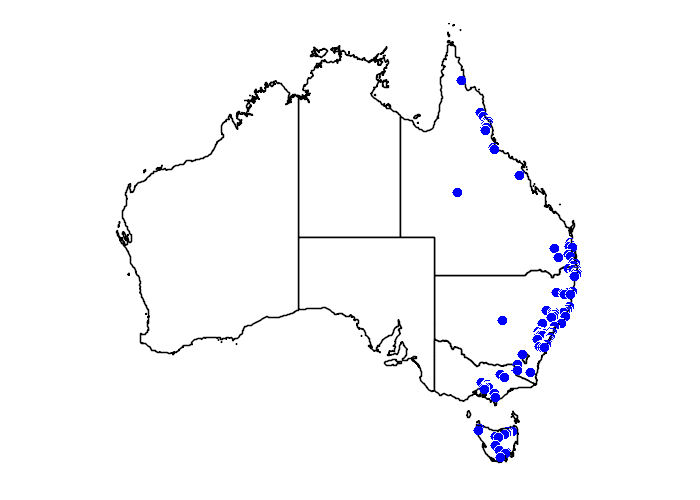
  • Eastern Australia, from northern Queensland south to Victoria, and also north-eastern Tasmania
  • Native to wetter coastal and mountain areas
  • In forests and woodlands, heath and urban areas
  • Look on the leaves of Native Pepper trees and plants in the Lauraceae (e.g. Camphor Laurel, Sassafras) and Rutaceae (citrus) families for caterpillars, and around Lantana and daises for butterflies
  • Male butterflies commonly collect around hilltops and can be seen flying above trees or spiralling up into the tree canopy
Species: WhatElse Image

What Else?

Similar Species

Another swallowtail butterfly won’t have green colouring on the undersides of its wings.

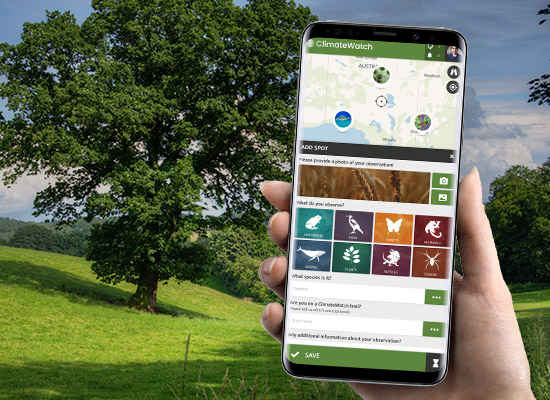
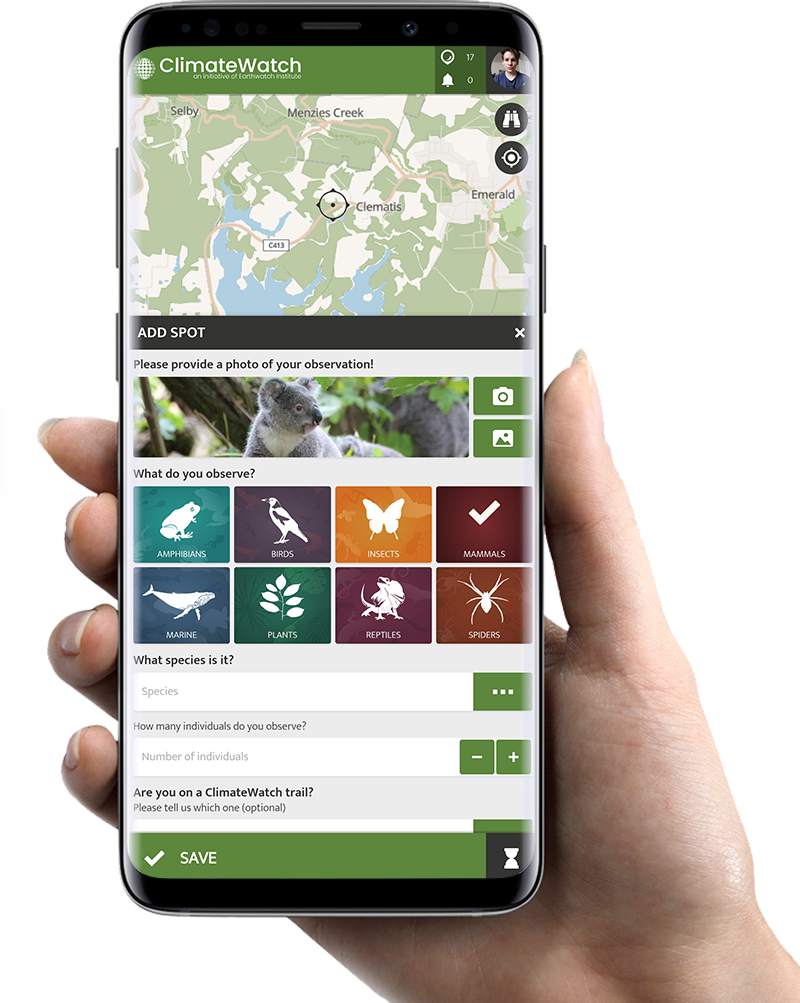
ClimateWatch smartphone app

Step 1: Citizen Science App Download

App Download

Download and install the free App on your Android device or on your iPhone via the App Stores linked below
Step 2: Register your SPOTTERON Citizen Science user account

Register

After starting the App, you can register your own user account on the platform with just your email address.
Step 3: Login and contribute in the Citizen Science App

Start!

Start observing! You are automatically logged-in after registering and you can add your first spot right away.


Download the App on your smartphone now or open the map in your browser:

 Badge App Download Android Badge App Download iPhone Open map

Latest Contributions

Kelly1
Date: 15.05.2026

Kelly1
Date: 12.06.2026

Kelly1
Date: 12.06.2026

Kelly1
Date: 12.06.2026

Kelly1
Date: 12.06.2026

Fetukai, Year 9
Date: 10.06.2026

Dhruvi
Date: 10.06.2026

Dhruvi
Date: 09.06.2026

Dhruvi
Date: 09.06.2026

Dhruvi
Date: 09.06.2026


See more Spots on the map